USB Flash Drives and the Future of Storage
In the 21st century, solid-state drives (SSDs) and flash memory have become popular for their speed and reliability over traditional hard drives. Flash storage is now common in devices like USB drives, smartphones, and tablets. Meanwhile, cloud storage has changed the way we access and manage data by providing scalable, remote solutions.
Looking forward, advancements such as quantum computing and DNA-based storage could further transform data storage. Quantum computers may greatly improve storage efficiency, while DNA storage offers incredible density and long-term durability.
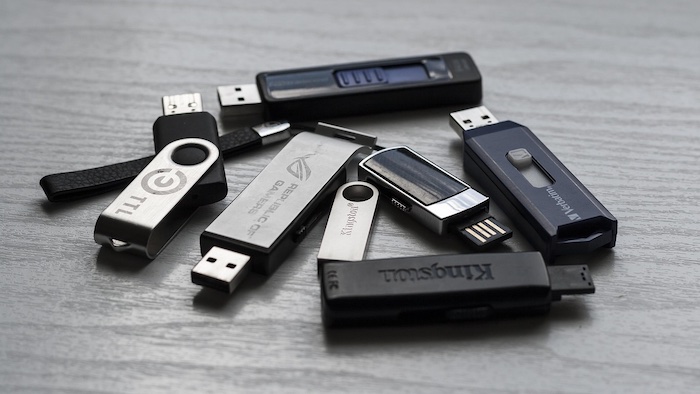
Photo from pixabay.com
Earliest Portable Data Designs:
Punchcards and Magnetic Tape
1800s-1950s
In 1804, Joseph-Marie Jacquard (France) patented punched cards that contained weaving instructions for his loom, enabling automated production of complex designs and making it easier for untrained workers to operate.
IBM and Hollerith punch cards served as a key technology for automating the storage, handling, and analysis of data in both public and private sectors.
Used for/by
- U.S. Census
- Social Security Administration
- Business accounting, inventory management, and payroll.
Developed by Herman Hollerith in the 1880s, these cards allowed information to be
represented by specific patterns of holes, which could be interpreted and processed by
electromechanical tabulating machines. This innovation made it possible to efficiently
encode, sort, and count large volumes of data for tasks such as census tabulation and
commercial recordkeeping, fundamentally transforming data processing during that era.
Cassette tape drives like the Commodore Pet’s Datasette stored and accessed digital information using regular audio cassettes. Because these tapes were inexpensive and widely used, the Datasette appealed to cost-conscious consumers.
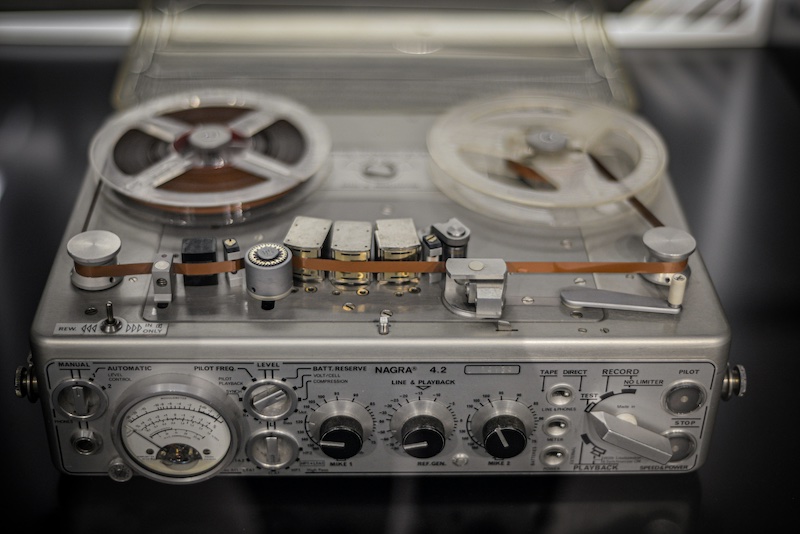
Photo from unsplash.com
The Many Floppy Disk Types
1970s to 1990s
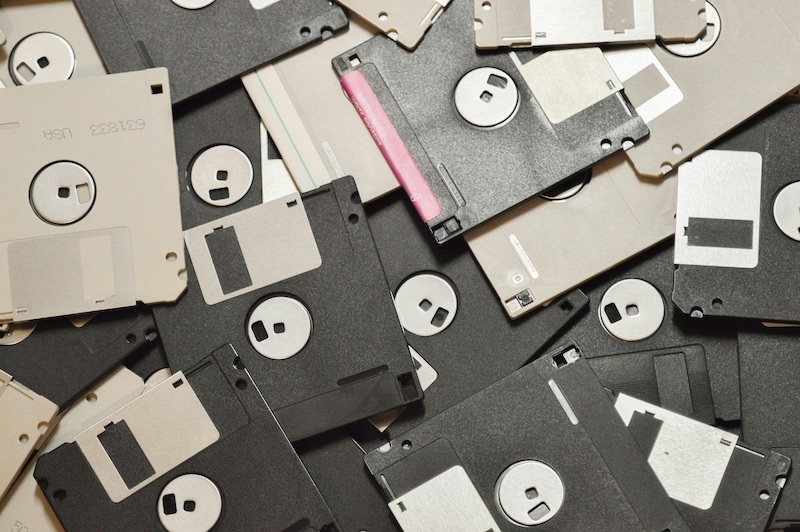
IBM introduced the first floppy disk in 1971, featuring an 8-inch design with around 80 KB of storage, making information more portable and easier to share. This innovation paved the way for smaller versions, including the 5.25-inch and the widely adopted 3.5-inch floppy disks, the latter offering up to 1.44 MB of storage and greater durability.
Floppy disks were instrumental in the rise of personal computers, allowing users to easily transfer files and install software. Iconic systems like the Apple II and IBM PC depended on floppy disks for distributing programs and managing data, helping make computers more accessible and popular throughout the 1980s and early 1990s.
The first IBM PC version of The Oregon Trail was released on both 3.5-inch and 5.25-inch floppy disks. During the late 1980s and early 1990s, it was common for software publishers to offer games in both formats to accommodate the different disk drives found on IBM-compatible PCs at the time. Users could choose the disk size that matched their computer's hardware.
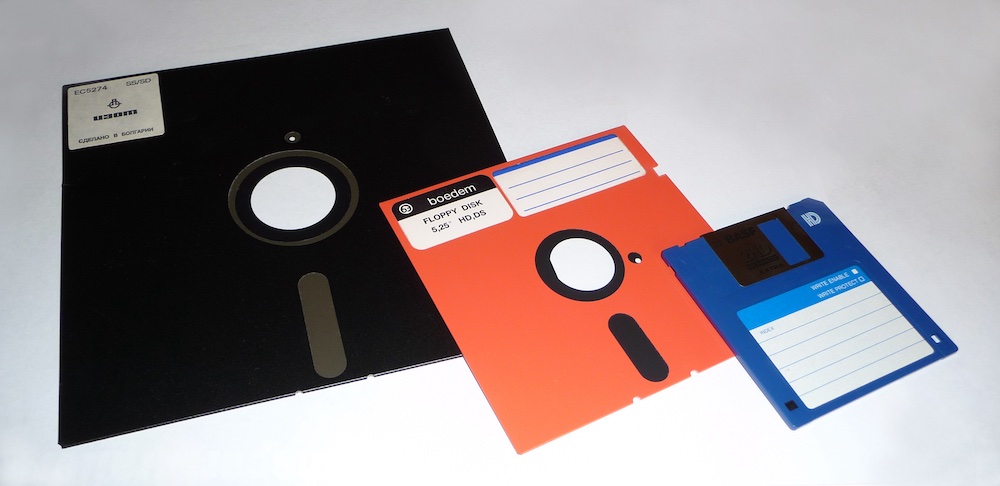
Photo from pixabay.com
Compact Discs and Digital Versatile Discs
CDs & DVDs
1980s to present-ish
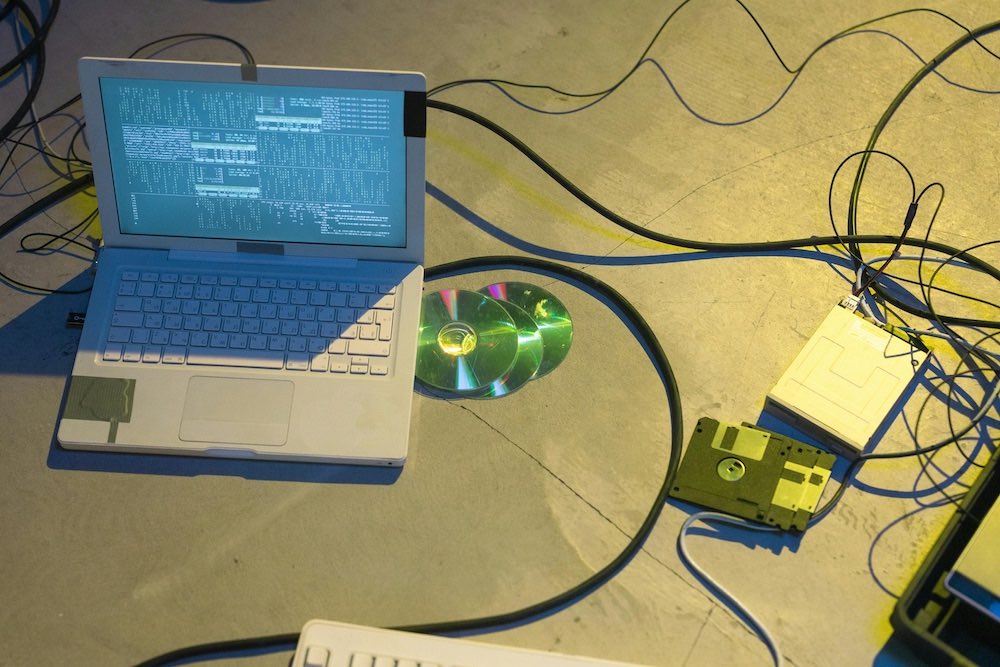
In the 1980s, compact discs (CDs)—developed by Philips and Sony—revolutionized data storage by using lasers to read data, offering greater capacity and durability than floppy disks. The mid-1990s brought DVDs, which used advanced lasers and multiple layers to store up to 4.7 GB per disc, making them ideal for movies and transforming home entertainment.
Blu-ray discs, introduced in 2006, used blue-violet lasers to achieve even higher storage—up to 128 GB with multiple layers—becoming the go-to format for high-definition video and large data storage needs.
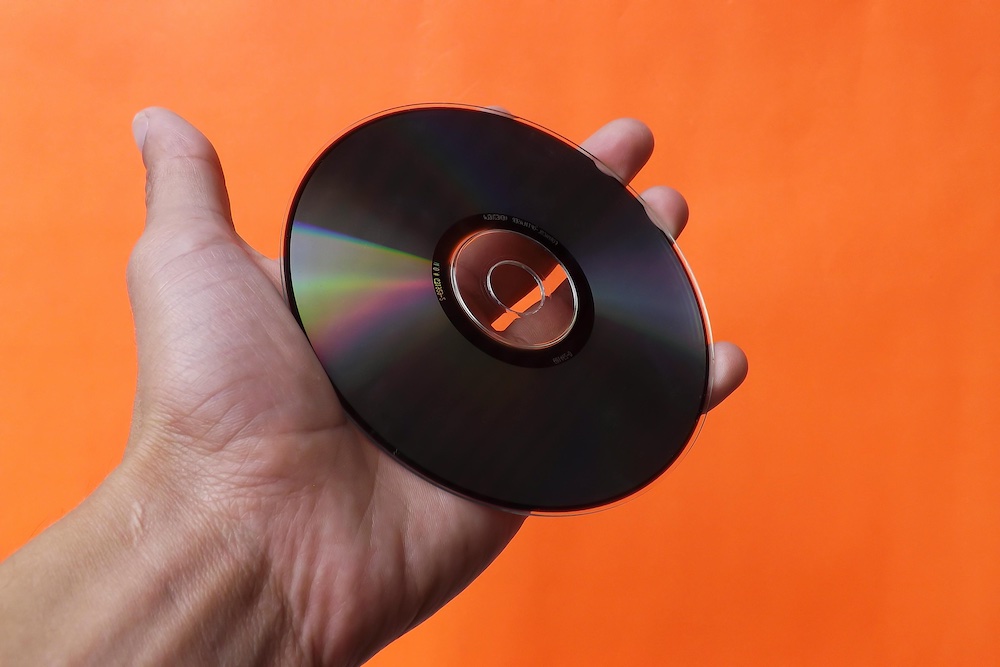
Photo from pixabay.com
Flash Memory Technology:
USB Flash Drives and MicroSD Cards
2000 to present
Storage capacity is normally 2GB to 64GB, but some can hold up to 2T (That's 2000GB!)
During the early 2000s, flash memory technology became increasingly popular because these devices featured solid-state construction with no moving parts, making them more robust and long-lasting. They also provided quicker data access and greater storage capacities. Thanks to their ease of use, dependability, and compatibility with a wide range of devices—including cameras, smartphones, and computers—flash drives soon became the preferred choice for portable data storage.
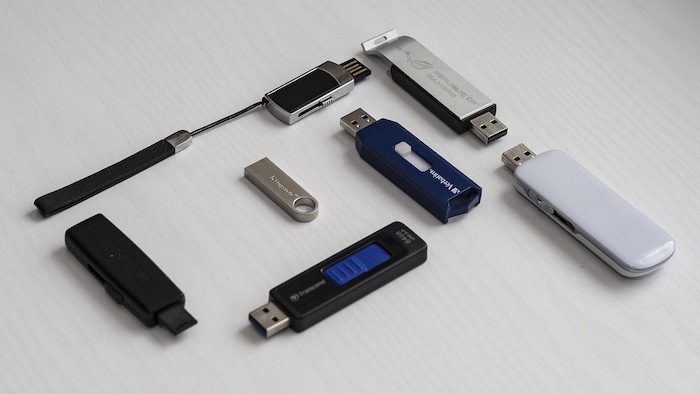
Photo from pixabay.com